

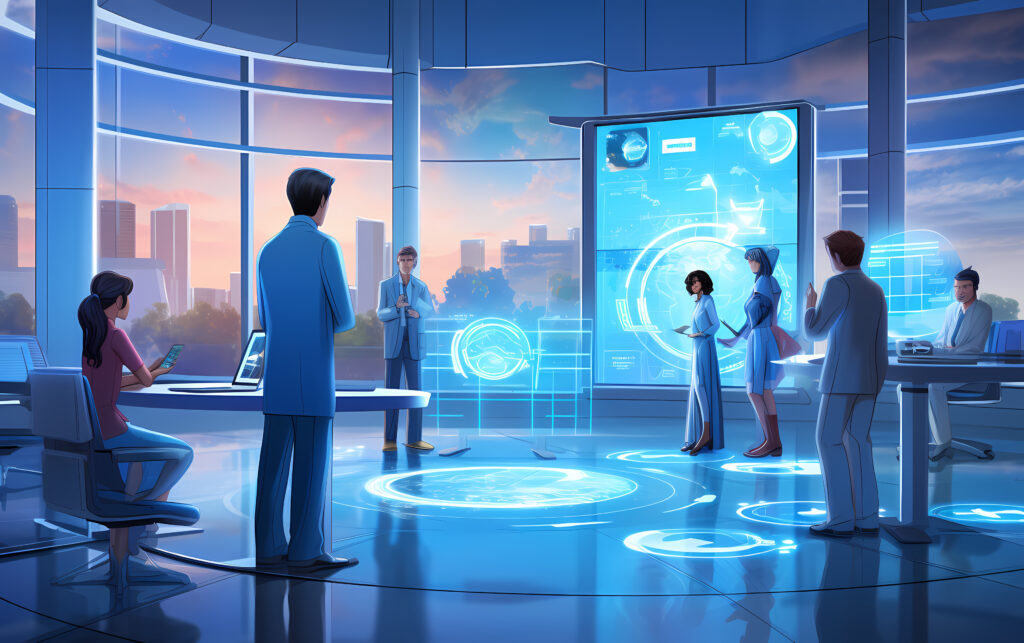
Digital display technology has evolved far beyond static advertising and scheduled content playback. Today, businesses across India and global markets demand intelligent display systems that adapt to customer behavior, deliver real-time information, and automate communication. This transformation is driven by the powerful integration of Artificial Intelligence (AI) and the Internet of Things (IoT).
From retail stores and corporate offices to airports, hospitals, educational institutions, and smart cities, AI and IoT-enabled digital display solutions are revolutionizing audience engagement. These smart technologies enable displays to collect data, analyze user interactions, and deliver personalized, context-aware content instantly.
As businesses accelerate digital transformation in 2026, AI and IoT are no longer optional features—they are essential components of modern digital signage systems.
What Are AI and IoT in Digital Display Solutions?
Artificial Intelligence (AI) enables digital displays to analyze data, recognize patterns, and make intelligent decisions without human intervention. AI-powered displays can identify audience demographics, optimize content delivery, and predict customer preferences based on historical data.
The Internet of Things (IoT) connects digital screens with sensors, cameras, cloud platforms, mobile devices, environmental monitors, and other smart equipment. These connected devices continuously exchange data, allowing displays to react automatically to changing conditions.
When AI and IoT work together, digital displays become dynamic communication platforms capable of delivering the right content to the right audience at the right time.
How AI and IoT Work Together in Smart Displays
Imagine a retail store where smart cameras detect customer age groups and foot traffic. AI analyzes this information while IoT sensors monitor inventory levels and environmental conditions. Based on these insights, the digital display instantly updates promotions, showcases products in stock, or highlights special offers most relevant to current shoppers.
This intelligent ecosystem creates a highly personalized customer experience while reducing manual effort for businesses.
Key Benefits of AI and IoT Integration in Digital Displays
1. Personalized Customer Experiences
One of the biggest advantages of AI-driven displays is personalized content delivery.
Instead of showing the same advertisement repeatedly, AI analyzes audience behavior and displays content based on:
- Age group
- Gender (where legally and ethically appropriate)
- Time of day
- Customer interests
- Purchase history
- Local weather conditions
- Geographic location
For example, a digital menu board may promote cold beverages during hot summer afternoons and hot coffee during rainy mornings in Mumbai.
Personalized messaging significantly improves customer engagement and increases conversion rates across industries.
2. Real-Time Content Management
Traditional digital signage requires manual scheduling and updates.
IoT-enabled systems allow businesses to manage thousands of screens remotely from a centralized cloud platform.
Content can automatically change based on:
- Weather conditions and forecasts
- Traffic information
- Inventory updates
- Breaking news
- Live event schedules
- Emergency alerts
This automation ensures information remains accurate and relevant at all times.
3. Predictive Maintenance
AI continuously monitors the health of digital display systems.
Instead of waiting for hardware failures, AI predicts maintenance requirements by analyzing:
- Operating temperature
- Power consumption patterns
- Display performance metrics
- Network connectivity status
- Component lifespan estimates
Businesses receive alerts before problems occur, reducing downtime and maintenance costs while extending equipment life.
4. Improved Operational Efficiency
IoT devices automate routine operations.
Businesses can remotely:
- Turn displays on and off
- Adjust brightness automatically
- Schedule content dynamically
- Monitor energy usage
- Update software remotely
- Diagnose technical issues
Automation reduces operational costs while improving reliability across multiple locations.
5. Better Audience Analytics
AI-powered digital displays generate valuable business intelligence.
Businesses gain insights into:
- Customer engagement metrics
- Dwell time per display
- Peak traffic hours
- Popular advertisement performance
- Viewer demographics
- Content effectiveness scores
These analytics help organizations make data-driven marketing decisions and maximize return on investment.
Industry Applications Across India and Global Markets
Retail
Retail stores use AI-powered digital displays to deliver personalized promotions, recommend products, display dynamic pricing, and enhance in-store experiences.
Smart shelves connected through IoT can even trigger promotional content when inventory reaches certain levels.
Healthcare
Hospitals use intelligent displays for:
- Patient queue management
- Appointment scheduling
- Health education content
- Emergency notifications
- Wayfinding and navigation
AI helps reduce waiting times while improving patient communication.
Corporate Offices
Modern workplaces rely on smart displays for:
- Meeting room scheduling
- Internal communication
- Employee announcements
- Performance dashboards
- Visitor management
IoT integration ensures real-time updates across multiple office locations.
Transportation
Airports, railway stations, and bus terminals require instant information updates.
AI and IoT help display:
- Live departure schedules
- Platform changes
- Weather alerts
- Emergency notifications
- Passenger guidance
The result is a smoother travel experience with fewer manual interventions.
Hospitality
Hotels and restaurants increasingly use AI-powered displays for:
- Digital menu boards
- Guest information
- Personalized welcome messages
- Event schedules
- Interactive directories
Connected systems improve customer satisfaction while simplifying operations.
Energy Efficiency Through Smart Displays
Energy efficiency has become a priority for businesses worldwide.
IoT sensors monitor ambient lighting and automatically adjust display brightness to reduce power consumption without compromising visibility.
AI also schedules screen operation based on business hours, occupancy levels, and customer traffic.
These intelligent features lower electricity costs while supporting sustainability initiatives.
AI-Powered Security Features
Modern digital display networks incorporate advanced security capabilities.
AI helps detect:
- Unauthorized access attempts
- Device tampering
- Network anomalies
- Suspicious activities
IoT devices continuously monitor connected equipment, helping businesses maintain secure digital signage infrastructures.
Challenges Businesses Should Consider
Although AI and IoT offer significant benefits, organizations should plan carefully before implementation.
Key considerations include:
- Data privacy and regulatory compliance (GDPR, local laws)
- Reliable internet connectivity
- Cybersecurity protection
- Integration with existing IT infrastructure
- Staff training and change management
- Scalable cloud management solutions
Working with experienced digital display solution providers ensures successful deployment while minimizing operational risks.
The Future of AI and IoT in Digital Displays
The next generation of digital display technology will become even more intelligent.
Emerging innovations include:
- Voice-controlled interactive displays
- AI-generated personalized advertising
- Computer vision for audience recognition
- Edge AI processing for faster decision-making
- Digital twins for remote monitoring
- 5G-enabled ultra-fast content delivery
- Predictive customer engagement
- Fully autonomous digital signage networks
As these technologies mature, businesses will benefit from smarter, faster, and more efficient communication systems.
Frequently Asked Questions
Q: What are AI and IoT in digital display solutions?
A: AI enables digital displays to analyze data and deliver personalized content, while IoT connects displays with sensors and devices for real-time automation and data exchange.
Q: How do AI-powered digital displays personalize customer experiences?
A: AI analyzes customer behavior, demographics, and preferences to display targeted content, promotions, and recommendations at the right time.
Q: What are the main benefits of AI and IoT integration in digital signage?
A: Key benefits include personalized experiences, real-time content management, predictive maintenance, operational efficiency, and improved audience analytics.
Q: Can IoT-enabled displays automatically update content?
A: Yes, IoT-enabled displays can automatically update content based on weather conditions, inventory levels, traffic, news, and other real-time data.
Q: What industries use AI and IoT digital display solutions?
A: Retail, healthcare, corporate offices, transportation, hospitality, education, and smart cities all use these intelligent display solutions.
Q: How do smart displays improve energy efficiency?
A: IoT sensors adjust brightness automatically, and AI schedules operation based on business hours and occupancy, reducing power consumption.
Conclusion
AI and IoT integration is redefining what digital display solutions can achieve. Instead of serving as simple advertising screens, today’s intelligent displays function as connected communication platforms capable of analyzing data, automating content delivery, improving operational efficiency, and enhancing customer experiences.
Whether deployed in retail stores, healthcare facilities, transportation hubs, educational institutions, hospitality venues, or corporate environments, AI-powered digital displays provide organizations with a significant competitive advantage.
Businesses that invest in smart digital signage today will be better positioned to deliver personalized experiences, optimize operations, and adapt to the rapidly evolving digital landscape. As technology continues to advance, AI and IoT will remain at the heart of the next generation of innovative digital display solutions.